
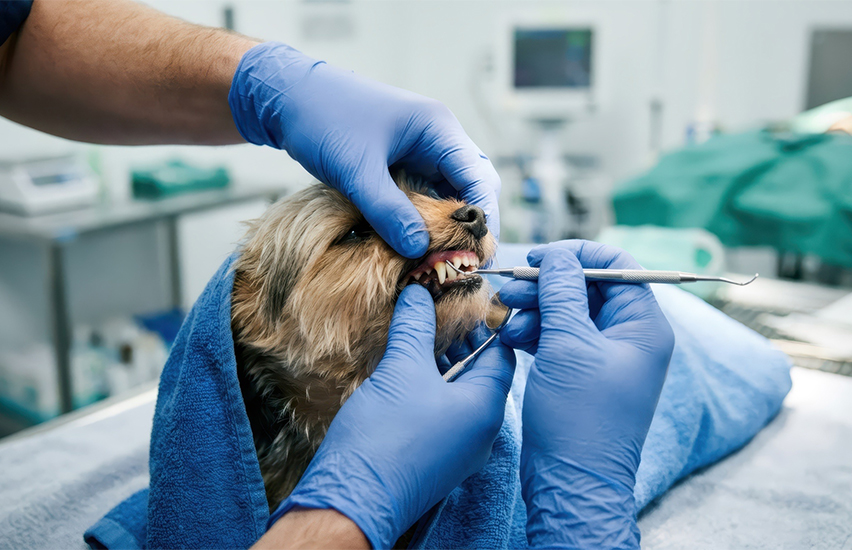
Toy breeds often come with big personalities — and equally big dental needs. Their small mouths, crowded teeth, and unique anatomy make them much more prone to dental disease than many owners realize. Even when everything looks cute on the outside, there can be a lot going on below the gumline.
In this blog, we’ll explore why small dogs are at higher risk and how you can give their mouths the extra care they need.
Crowded Teeth in a Small Jaw
Most toy breeds have the same number of teeth as larger dogs but far less space in their mouths. That often leads to:
- Crowded or overlapping teeth
- Rotated teeth that trap food and plaque
- Tight spaces that are hard to clean, even with brushing
Crowding means plaque and bacteria don’t just sit on the tooth surface — they wedge between teeth and under the gumline, where they’re much harder to remove without professional care.
Earlier Onset of Periodontal Disease
Because plaque builds up faster in these tight spaces, toy breeds commonly develop periodontal (gum) disease at a younger age than larger dogs. You may see:
- Bad breath that doesn’t improve with diet changes
- Red, swollen, or bleeding gums
- Yellow or brown buildup near the gumline
Even if your small dog is still acting normal, periodontal disease can progress quietly and cause chronic pain, tooth loss, and damage to the bone that supports the teeth.
Hidden Problems You Can’t See by Just Looking
Disease Below the Gumline
In many toy breeds, the most significant disease isn’t on the visible part of the tooth — it’s on the roots and supporting structures under the gums. Without dental X‑rays, these problems are easy to miss.
Common “hidden” issues include:
- Bone loss around the roots
- Root infections and abscesses
- Tooth resorption, where the tooth slowly breaks down from within
A mouth that looks “not too bad” on the surface can still be very painful once we see what’s happening on X‑rays.
Retained Baby Teeth
Small dogs are more likely to keep baby teeth that never fall out on their own. These retained teeth:
- Take up space that adult teeth need
- Push permanent teeth out of alignment
- Create even more areas where plaque and bacteria can accumulate
If baby teeth remain after the adult teeth have come in, they often need to be removed to protect long‑term dental health.
How Dental Disease Affects Your Toy Breed’s Whole Body
Dental problems don’t stay confined to the mouth. Over time, untreated dental disease can affect:
- Comfort and behavior: Pets may eat more slowly, chew on one side, or avoid certain crunchy foods, even if they don’t stop eating altogether.
- Weight and nutrition: Chronic mouth pain can make it harder to maintain a healthy appetite.
- Overall health: Ongoing inflammation and infection in the mouth may contribute to problems elsewhere in the body over time.
Many small dogs are very good at hiding discomfort. They may keep wagging, playing, and eating while living with significant dental pain.
Extra Care Small Dogs Need
More Frequent Professional Cleanings
Because of their anatomy and risk level, many toy breeds benefit from professional dental cleanings more often than larger dogs. The right interval depends on:
- Age
- Breed
- Current dental status
- How well home care is going
During a professional cleaning under anesthesia, we can:
- Thoroughly remove plaque and tartar above and below the gumline
- Take full‑mouth X‑rays to check roots and bone
- Identify teeth that are loose, infected, or causing pain
- Make a plan for any needed extractions or follow‑up care
Daily or Near-Daily Home Care
For small dogs, home dental care is not optional — it’s a key part of slowing down disease between professional visits.
Helpful tools can include:
- Toothbrushing with pet-safe toothpaste
- Veterinary‑recommended dental chews or diets
- Rinses, gels, or water additives approved for dental use
Brushing is still the gold standard, even for wiggly toy breeds. Starting slowly, using lots of positive reinforcement, and keeping sessions short can make a big difference.
What to Watch for in Your Small Dog
Even if your dog seems fine, schedule a dental evaluation if you notice:
- Bad breath that doesn’t improve
- Yellow or brown buildup on teeth
- Red, puffy, or bleeding gums
- Dropping food, chewing on one side, or hesitating to pick up toys
- Pawing at the mouth or rubbing the face
- Any loose, broken, or discolored teeth
These are all signs that your dog’s mouth needs more than just at‑home care.
Partner with Veterinary Dental Care for Your Toy Breed’s Mouth Health
Small dogs have big dental needs, but you don’t have to manage them alone. A tailored plan for your toy breed might include:
- Regular professional cleanings at intervals appropriate for their risk level
- Full‑mouth X‑rays to find hidden problems early
- Guidance on brushing and home care products that actually help
- Timely treatment of painful or diseased teeth before they affect the quality of life
Toy breeds can enjoy comfortable, healthy mouths well into their senior years with the right combination of professional dentistry and consistent home care.
If you have a small dog and you’re unsure how their teeth are really doing, a dedicated dental exam is a great place to start. Veterinary Dental Care in Charleston can help you understand your dog’s current dental health and build a plan that keeps their mouth as healthy as the rest of them. Reach out today.