
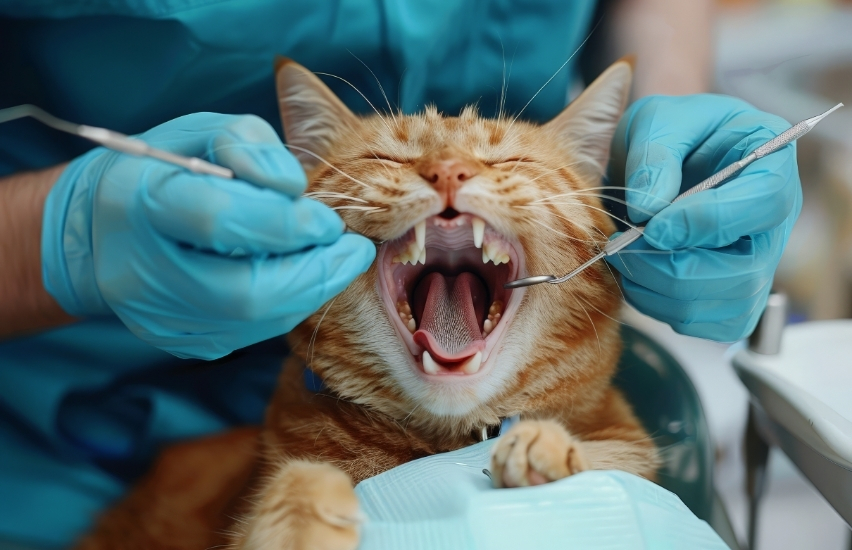
If out of nowhere, your cat’s breath smells awful, it’s not just “cat breath.” A lot of people assume bad breath is normal for pets, but in reality, it’s often one of the first signs that something is wrong, and dental disease is usually at the center of it.
Cats are masters at hiding pain. They can be dealing with infected teeth or serious oral disease while still eating and acting mostly normal. That means bad breath might be the only early warning sign you get. Paying attention now can save your cat from long-term pain, tooth loss, and bigger health problems later.
In this blog, we’ll break down what’s actually behind bad breath in cats and when it’s time to take action.
The Most Common Cause: Dental Disease
The number one reason cats develop bad breath is periodontal disease. This starts when plaque builds up on the teeth and hardens into tartar. Bacteria settle under the gumline, causing inflammation and infection that most owners can’t see.
As the disease progresses, it destroys gum tissue and the structures holding the teeth in place. That infection is what creates the strong, foul odor. It’s not just a mouth problem either — bacteria from dental disease can enter the bloodstream and affect the kidneys, heart, and liver over time.
Because cats rarely show obvious symptoms, bad breath is often the first noticeable clue that dental disease has already started.
Tooth Resorption: A Painful Condition Many Owners Miss
Another common but lesser-known cause of bad breath is tooth resorption. This is a condition where a cat’s body begins breaking down its own teeth from the inside out. It’s extremely painful, even though cats often keep eating normally.
As tooth structure erodes, infection and inflammation increase, which can create a strong odor. Owners may notice subtle signs like:
- Dropping food while eating
- Sudden preference for soft food
- Pawing at the mouth
- Irritability when the face is touched
Dental X-rays are usually required to properly diagnose resorptive lesions, which is why professional dental exams matter so much.
Infections, Abscesses, and Broken Teeth
Cats can develop abscesses or fractured teeth from trauma, chewing hard objects, or untreated dental disease. When bacteria enter exposed tissue, infection builds quickly and produces a very noticeable smell.
A cat with a dental abscess might still appear fine, but could be in severe pain. Other warning signs include swelling along the jaw, drooling, or avoiding chewing on one side of the mouth.
Left untreated, dental infections can spread beyond the mouth and become serious medical issues.
Bad Breath That Isn’t Dental
While dental disease is the most common cause, sometimes bad breath points to a different health concern. Certain odors can give clues:
- Sweet or fruity smell: may be linked to diabetes
- Ammonia or urine-like odor: could suggest kidney disease
- Rotting or metallic smell: may indicate infection or oral tumors
- Persistent foul odor with vomiting or appetite changes: could signal gastrointestinal issues
If your cat’s breath changes suddenly or is paired with other symptoms, a full veterinary exam is important to rule out systemic illness.
Signs Your Cat May Have Oral Pain
Cats don’t usually cry out or stop eating when something hurts in their mouth. Instead, the signs are subtle and easy to miss.
Watch for behaviors like:
- Eating slower or chewing differently
- Grooming less than usual
- Drooling or wet fur around the mouth
- Head shaking or face rubbing
- Sudden mood changes or hiding more
Bad breath combined with any of these changes is a strong reason to schedule a dental evaluation.
What a Professional Dental Evaluation Looks Like
A proper dental assessment involves more than just looking at the visible teeth. Many dental problems occur below the gumline, where they can’t be seen during a basic exam.
Veterinary dental care typically includes:
- Full oral examination under anesthesia
- Dental X-rays to evaluate hidden disease
- Professional cleaning above and below the gumline
- Treatment of infected or damaged teeth
This approach allows the team to identify problems early and treat pain your cat may not be showing outwardly.
Can You Prevent Bad Breath in Cats?
You can’t prevent every dental issue, but you can dramatically reduce the risk with consistent care. Prevention focuses on limiting plaque buildup and catching problems early.
Helpful steps include:
- Regular professional teeth cleaning
- Veterinary-approved dental treats or diets
- Tooth brushing, if your cat tolerates it
- Routine wellness exams that include oral checks
Even small preventive efforts make a big difference over time.
When to Call the Vet
If your cat’s breath smells strong, rotten, or noticeably worse than usual, don’t wait to see if it goes away. Dental disease progresses silently and often worsens quickly once infection sets in.
Schedule an exam if you notice:
- Persistent bad breath
- Changes in eating habits
- Drooling or mouth sensitivity
- Visible tartar or red gums
- Any swelling around the face or jaw
Early treatment is almost always simpler, less invasive, and far more comfortable for your cat.
Don’t Ignore Bad Breath. Schedule a Check Up at Veterinary Dental Care in Charleston, SC.
Bad breath in cats isn’t normal — it’s usually a signal that something is happening beneath the surface. Whether it’s periodontal disease, tooth resorption, infection, or an underlying health condition, ignoring it allows pain and damage to progress.
The good news is that with proper feline dental care and timely evaluations, most oral problems can be successfully treated and managed. Paying attention to small changes now can protect your cat’s health, comfort, and quality of life for years to come. Reach out to book an appointment.