
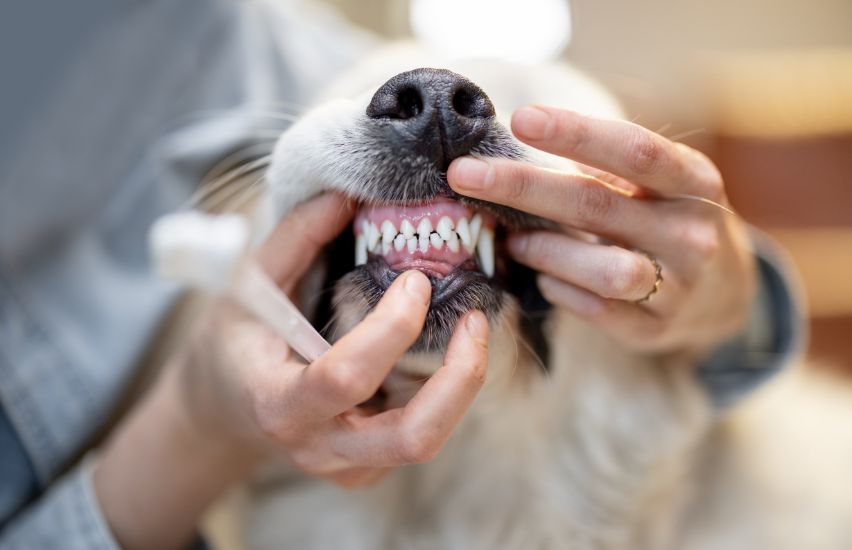
If you’ve been putting off your dog’s dental appointment because you’re unsure about the cost, you’re not alone. Dog dental cleaning is one of the most commonly delayed veterinary services — and one of the most important. Without regular professional care, dental disease can silently progress, leading to pain, tooth loss, and health complications that are far more expensive to treat.
This guide answers the most common question local pet owners ask, “How much does dog dental cleaning cost in Mt. Pleasant, SC?” More importantly, it explains what’s included, what drives the cost, and why staying current with dental care is one of the best investments you can make in your dog’s long-term health.
Why Is Professional Dental Cleaning Important for Dogs?
Many dog owners assume that chewing on toys or kibble keeps their dog’s teeth clean. While these activities provide some benefit, they are no substitute for professional dental care. Studies estimate that by age three, the majority of dogs show signs of periodontal disease — infection and inflammation affecting the gums and structures supporting the teeth.
Periodontal disease doesn’t stay confined to the mouth. Advanced dental infections have been associated with systemic health conditions affecting the heart, kidneys, and liver. Bacteria from infected gum tissue can enter the bloodstream and affect organs throughout the body.
Regular professional dental cleanings help prevent this progression by removing tartar buildup, identifying early problems, and giving your veterinary dental team a complete picture of your dog’s oral health, including what’s happening below the gumline where you can’t see.
What Is Included in a Professional Dog Dental Cleaning?
Professional dental cleanings for dogs are significantly more comprehensive than simply scraping visible tartar off teeth. They are performed under general anesthesia by a veterinary dental team and typically include:
Pre-anesthetic evaluation: A physical examination and sometimes blood work to ensure your dog is safe to undergo anesthesia.
General anesthesia: This is essential for a thorough cleaning. Anesthesia keeps your dog completely still, eliminates pain and anxiety, protects the airway from water and debris, and allows the dental team to properly evaluate and clean all surfaces of every tooth — including under the gumline.
Full-mouth dental radiographs: Dental X-rays reveal what’s happening below the gumline, including tooth root problems, bone loss, cysts, and early disease that cannot be seen on visual examination alone. Many dental problems are completely invisible without radiographs.
Scaling and cleaning: Ultrasonic and hand scaling instruments are used to remove tartar from all tooth surfaces, including the critical area below the gumline (subgingival cleaning).
Polishing: After scaling, tooth surfaces are polished to remove micro-scratches that can harbor bacteria.
Oral examination and charting: Each tooth and surrounding tissue is examined and documented. Probe depths are measured around every tooth to assess gum and bone health.
Extractions or additional procedures if needed: If problematic teeth are identified, extractions or other treatments may be recommended at the time of cleaning.
Discharge instructions and home care recommendations: After the procedure, you’ll receive guidance on maintaining your dog’s oral health between cleanings.
How Much Does Dog Dental Cleaning Cost in Mt Pleasant, SC?
Dog dental cleaning costs in Mt. Pleasant, SC, vary depending on several factors. General estimates for a routine professional cleaning — including anesthesia, radiographs, scaling, and polishing — typically range from approximately $300 to $800 or more for straightforward cases.
When additional treatments are needed — such as tooth extractions, periodontal therapy, treatment of oral masses, or management of complex dental disease — costs will be higher. Large breeds with more teeth, older dogs with advanced disease, and dogs requiring specialized care or longer anesthesia time may also see higher costs.
The only way to get an accurate estimate for your specific dog is through an examination and consultation with a veterinary dental team. Many practices provide estimates before scheduling the procedure.
It’s also worth noting that investing in regular preventive dental care is typically more cost-effective than treating advanced dental disease. A routine cleaning today is far less expensive than managing a jaw infection, multiple extractions, or systemic complications from untreated periodontal disease later.
What Factors Affect the Cost of Dog Dental Cleaning?
Several variables influence the total cost of your dog’s dental cleaning:
Dog size and number of teeth: Larger dogs have more teeth and generally require more time, anesthetic agents, and monitoring. A Great Dane’s cleaning will take longer than a Chihuahua’s.
Age and health status: Older dogs or those with existing health conditions may require more extensive pre-anesthetic workup and more careful monitoring during the procedure.
Severity of existing dental disease: A dog with minimal tartar buildup and healthy gums requires less intensive cleaning than one with heavy calculus accumulation and advanced periodontal disease.
Need for dental radiographs: Full-mouth X-rays are a critical component of a comprehensive dental evaluation, but they do add to the overall cost. Practices that skip radiographs may quote lower initial prices, but they may also miss significant dental pathology.
Extractions or additional procedures: If teeth are found to be unsalvageable during cleaning — which often isn’t known until full radiographs are reviewed under anesthesia — extraction fees add to the overall cost. Complex extractions of multi-rooted teeth or teeth with root fractures take more time and expertise.
Location and practice type: General veterinary practices, specialty-trained veterinary dentists, and veterinary dental specialists may have different fee structures reflecting their training, equipment, and expertise.
How Often Should Dogs Have Professional Dental Cleanings?
The frequency of professional dental cleanings depends on your individual dog. As a general guideline:
-
- Most dogs benefit from a professional dental cleaning once per year
-
- Dogs prone to rapid tartar buildup, certain breeds with crowded teeth, and dogs with a history of periodontal disease may benefit from more frequent cleanings
-
- Dogs with excellent at-home dental care, minimal tartar, and healthy gums may be able to go longer between cleanings
Your veterinary dental team will provide a personalized recommendation based on your dog’s specific oral health status at each examination. Regular cleanings also make each subsequent cleaning easier — a dog maintained with annual care rarely develops the level of disease that requires hours of intensive treatment.
Frequently Asked Questions
The cost varies based on your dog’s age, oral health, diagnostic needs, and whether additional treatments such as extractions or periodontal therapy are required. Routine cleanings typically range from approximately $900 to $1800 for straightforward cases.
Most professional dental cleanings include an oral examination, anesthesia, dental radiographs, scaling, polishing, and a comprehensive evaluation of your dog’s oral health.
Professional dental cleanings are typically performed under anesthesia to allow for a thorough cleaning, detailed examination, and diagnostic imaging.
Many dogs benefit from annual dental evaluations, but the ideal schedule depends on breed, age, and overall oral health.
Routine dental care may help identify and address dental problems early, reducing the risk of advanced periodontal disease and tooth loss.
Professional dental cleanings can help prevent painful dental disease, improve overall health, and reduce the likelihood of more extensive treatments later.
Common signs include bad breath, tartar buildup, red gums, difficulty chewing, drooling, and changes in eating habits.
Don’t wait until dental disease becomes an emergency. Check out our resource on dental rinses, chews, and toys: what actually works? to supplement your dog’s dental care at home.
When it’s time for a professional evaluation, our team is here to help you understand your dog’s oral health and create a plan that fits your pet’s needs. Contact us today to schedule an appointment for your dog.